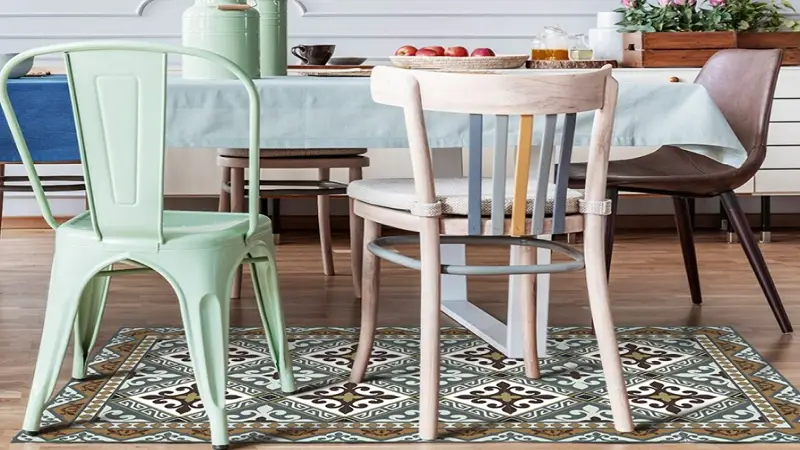
We all love the aesthetic of a vintage Persian runner in the hallway or stylish encaustic tiles in the kitchen. But let’s be real about British homes: between muddy boots from the rainy school run, pets tracking in garden debris, and the inevitable kitchen spills, maintaining delicate textiles or installing new tiles can be a nightmare.
This is where the modern interior design market has shifted towards a smarter solution: vinyl rugs. Far from the old-school linoleum of the 70s, modern PVC mats are becoming a staple for smart homeowners who refuse to compromise style for practicality.
Why Vinyl? The Technical Perspective
From an expert point of view, vinyl rugs (often made from high-quality PVC mixed with polyester) solve three major problems inherent in traditional carpeting: hygiene, durability, and thermal insulation.
Unlike traditional fibres that trap dust mites, pollen, and pet dander, the surface of a vinyl mat is non-porous. For households with allergy sufferers, this is a game-changer. There is simply nowhere for allergens to hide.
The “High-Traffic” Zone Solution
The kitchen and the hallway are the battlegrounds of any home.
- In the Kitchen: A dropped jar of pasta sauce spells disaster for a fabric rug. With a vinyl runner, it’s a simple wipe with a damp cloth. Moreover, they provide a protective layer against scratches on hardwood floors or dropped utensils cracking ceramic tiles.
- In the Bathroom: Unlike bath mats that stay damp and breed bacteria, vinyl is water-resistant and dries instantly, making it an excellent choice for splashing zones.
Design Versatility One of the reasons for their surging popularity is the printing technology. You can now get vinyl mats that perfectly mimic terrazzo, concrete, or intricate Moroccan tiles. Brands specialising in this niche, such as Decormat, offer designs that allow you to change the entire vibe of a room—from Boho to Industrial—without calling in a contractor. It’s “renovation” without the dust and noise.
Expert FAQ: Common Questions About Vinyl Rugs
To help you determine if this solution is suitable for your home, we’ve compiled answers to the most frequently asked questions found online.
1. Can I use vinyl rugs with underfloor heating?
This is the number one concern for modern homeowners. Generally, yes. High-quality vinyl rugs typically have a low thermal resistance, allowing heat to pass through efficiently. However, it is always recommended to check the manufacturer’s specifications to ensure the material can withstand specific temperatures without deforming.
- Are vinyl rugs safe for pets?
Absolutely. In fact, they are often recommended for pet owners. They are durable enough to withstand claws, and unlike looped carpets, claws won’t get snagged. More importantly, “accidents” are straightforward to clean, and they don’t retain odours as fabric rugs do.
3. Do vinyl rugs slip on hard floors?
Most premium vinyl mats are designed with safety in mind and have a weighted, anti-slip backing or a naturally gripping texture on the underside. If you are placing one on a highly polished gloss tile, a thin anti-slip underlay can be added for extra security, though it is rarely needed for standard wood or laminate floors.
4. How do I clean a vinyl rug?
Simplicity is key here. Avoid harsh bleach or abrasive scrubbing brushes, which can dull the print. Warm water and a mild detergent (like dish soap) are all you need. For most daily maintenance, a robotic vacuum or a quick mop is perfectly sufficient.
If you are looking for a way to protect your floors while injecting personality into your space, vinyl rugs are currently the most pragmatic investment for busy homes. They offer the visual warmth of a rug with the durability of a hard floor—a perfect hybrid for modern living.