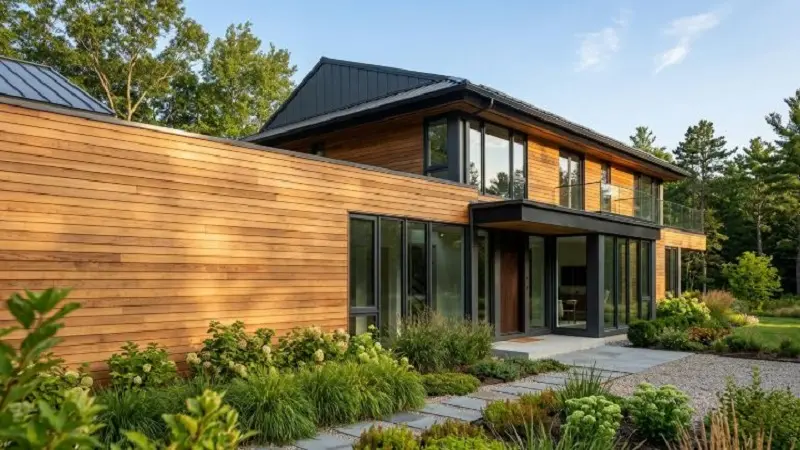
The best timber cladding for outdoor buildings is usually a durable, well-detailed and correctly treated species such as larch, cedar, thermowood or suitable treated softwood. The right answer depends on the building, budget, exposure, desired appearance and how much maintenance the owner is willing to accept.
Timber cladding is popular because it gives sheds, garden rooms, workshops, studios and outbuildings a natural finish that can look traditional, contemporary or rustic. It can also help protect the structure beneath when it is installed with the correct battens, ventilation gap, fixings and detailing.
For customers comparing cladding boards, timber species and outdoor building materials, Harlow Bros supplies timber products for domestic, trade and landscaping projects, with the branch knowledge needed to help match material choice to real-world use.
What makes timber cladding suitable for outside use?
Outdoor timber cladding needs to cope with rain, wind, sunlight, seasonal movement and repeated wetting and drying. The best cladding is not simply the best-looking board; it is the board that suits the exposure level and has been installed so water can drain and air can circulate.
Timber Development UK’s Timber Cladding Handbook describes timber cladding as an attractive, economical and versatile way to finish and protect exterior walls. That protection depends on good specification and detailing. If boards trap water, sit too close to the ground or are fixed with unsuitable fasteners, even a good species can perform poorly.
The key factors are:
- Natural durability or preservative treatment
- Correct use class for the exposure
- Good ventilation behind the boards
- Suitable stainless steel or corrosion-resistant fixings
- Sensible detailing around corners, openings and lower edges
- A finish or maintenance plan that suits the desired appearance
Is cedar the best timber cladding?
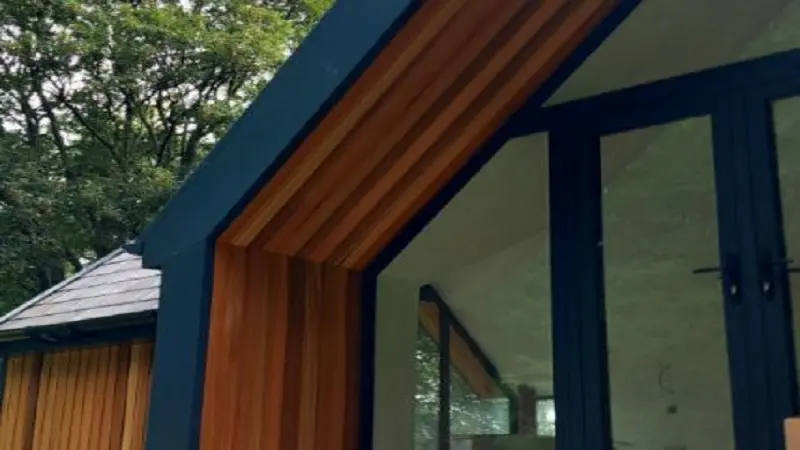
Cedar is one of the best-known cladding timbers because it is naturally durable, lightweight and visually attractive. Western red cedar is especially popular for premium garden rooms and modern outbuildings because it has warm colour variation and weathers to a silver-grey if left untreated.
Its main drawback is cost. Cedar is usually more expensive than treated softwood and some other cladding options. It is also softer than some timbers, so it needs careful handling and good installation.
Cedar can be an excellent choice for a high-end outdoor building where appearance and natural durability matter. It is less likely to be the best choice if the project is highly budget-sensitive or likely to take knocks from tools, bikes, bins or heavy garden equipment.
Is larch good for outdoor cladding?
Yes, larch is a strong and attractive option for outdoor timber cladding. It is often chosen because it offers a natural appearance, good durability and a slightly more robust feel than some softer cladding timbers.
British or Siberian larch can work well on garden offices, workshops and rural outbuildings, particularly where the owner wants visible grain and a more characterful finish. Like cedar, it can be left to weather naturally, although the final colour will depend on exposure and maintenance.
Larch still needs proper detailing. It should be kept away from standing water and installed with appropriate ventilation. Movement should also be expected, so board profile and fixing method matter.
When is treated softwood the best choice?
Treated softwood can be the best choice when budget, availability and practicality are priorities. It is commonly used for sheds, workshops, storage buildings and garden structures because it is affordable and widely available.
The treatment is important. Timber Development UK guidance on Use Class 3 explains that wood used outdoors but not in contact with the ground must be appropriate for that exposure. Cladding sits in that type of environment, so buyers should choose boards suitable for external use and maintain them as recommended.
Treated softwood may need more upkeep than cedar or some modified timbers, especially if the owner wants to preserve colour. However, for many garden buildings, it gives a strong balance of cost and performance.
What about thermowood and modified timber?
Thermowood and other modified timbers are often chosen where stability, durability and consistent appearance are important. Thermal modification changes the timber so it is less prone to moisture-related movement and more suitable for external cladding.
These products can be useful for modern garden rooms, commercial outbuildings and projects where the owner wants a cleaner, more predictable finish. They may cost more than basic treated softwood, but they can reduce the risk of movement and improve long-term performance.
As with all cladding, modified timber still needs correct installation. The treatment or modification does not remove the need for ventilation, drainage and suitable fixings.
Which profile is best for an outdoor building?
The best cladding profile depends on the look and exposure of the building. Feather edge, shiplap, tongue and groove, board-on-board and rainscreen profiles all behave differently.
Feather edge is a traditional choice for sheds and rural buildings. Shiplap gives a neater, overlapping profile. Tongue and groove can look clean, but it must be suitable for external use and installed so water cannot become trapped. Open-jointed rainscreen cladding can look very modern but requires careful detailing behind the boards.
Harlow Bros would generally advise buyers to think about the full cladding system rather than choosing by profile name alone. The profile, membrane, battens, fixings and finishing details all work together.

Do you need planning permission for timber cladding?
Planning permission may be needed in some cases, particularly if cladding changes the appearance of a house in a conservation area, National Park, Area of Outstanding Natural Beauty or the Broads. The Planning Portal states that planning permission is required before cladding the outside of a house with timber in those protected areas, while outside them cladding may be allowed if materials are of similar appearance to the existing house.
For standalone sheds and garden rooms, rules can depend on size, location, height, use and whether the building is within permitted development. Building Regulations may also matter for larger outbuildings or structures close to boundaries. The safest approach is to check before ordering if the project is unusual, large or close to a boundary.
How should timber cladding be maintained?
Timber cladding should be inspected regularly and maintained according to the species, treatment and finish. Some owners want the timber to weather naturally. Others want to preserve colour with oils, stains or coatings.
Maintenance usually includes checking for loose boards, damaged fixings, blocked ventilation gaps, dirt build-up and areas where water is lingering. Lower edges, corners and elevations exposed to heavy weather often need the most attention.
A good finish can improve appearance and weather resistance, but it should be compatible with the timber and the intended look. Darker coatings may show less weathering but can absorb more heat. Clear finishes may need more frequent reapplication.
Final advice
The best timber cladding for an outdoor building is the one that suits the exposure, design, budget and maintenance expectations. Cedar and larch are strong choices for natural durability and appearance. Treated softwood is practical and cost-effective. Thermowood and modified timbers are useful where stability and consistency matter.
The biggest mistakes are choosing purely on colour, ignoring ventilation or using timber that is not suitable for external exposure. Cladding should be treated as a system, not just a board.
With advice from Harlow Bros, buyers can compare species, profiles and treatments more confidently, helping outdoor buildings look good, last longer and perform properly in British weather. See more